HIGH
CYCLE
180
Hz frequency
|
High
cycle means just what the name implies. The 180 Hz frequency maximizes
the efficiency of the three-phase low induction electric motor located
within the vibrator head. The high efficiency is due in part to the
motors high torque as well as constant speed. It is ideal
for low slump concrete. The high Cycle Vibrator is recommend
for general heavy construction, for example, bridges, walls, roadways,
etc.
|
|
|
Features
include a steel or interchangeable rubber nose.
Large capacity dual eccenctric bearings for longer life. Replaceable
eccentric barrel for minimal repair costs. High eccentric value
for large radius of effect. Large motor bearings for longer bearing
life. Bronze cooling fan for total circulation of air throughout
the motor to eliminate heat build-up.
|
FLEXIBLE
SHAFT
|
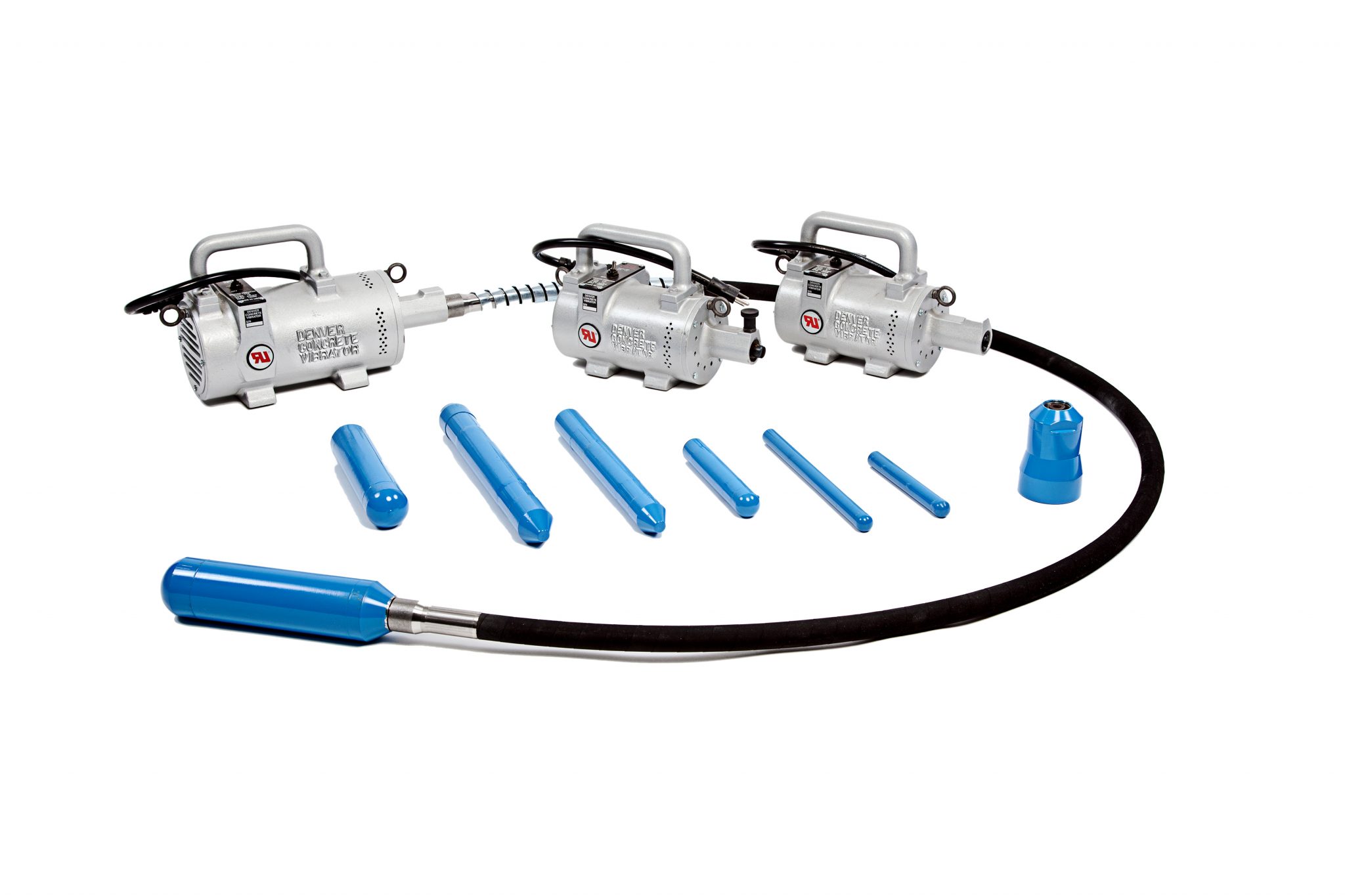
Flexible
shaft vibrators are designed for all general construction. Typical
applications include footings and stem walls, small slabs, driveways,
and stairways. They are very portable and convenient to use.
|
PNEUMATIC
|
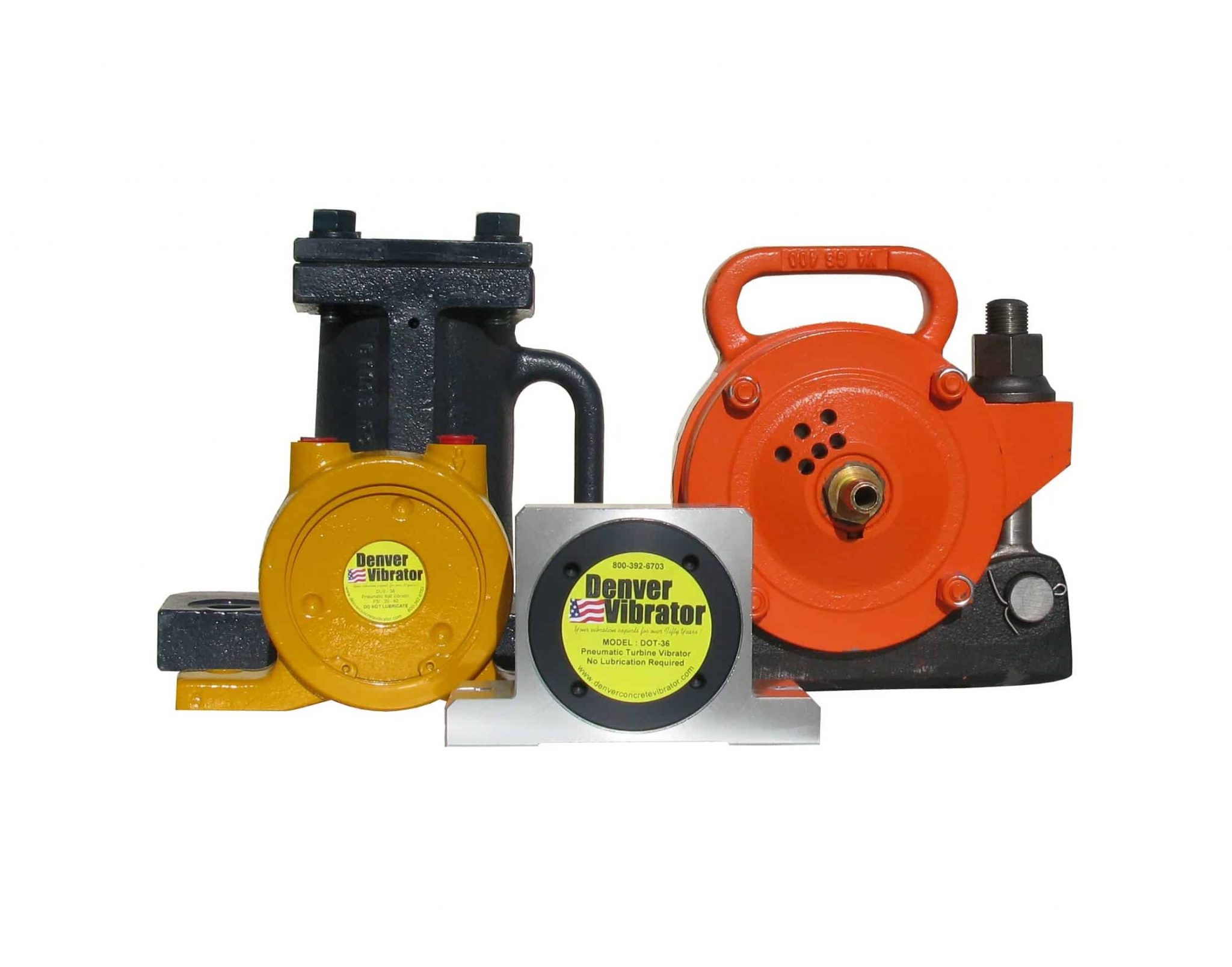
The pneumatic
vibrators are designed for mass concrete pours requiring
prolonged continuous operation. The absence of heat build-up
makes prolonged operation possible. The 3-1/2 & 4-1/2 inch Pneumatic
vibrator units were designed for large pours with large aggregate.
Requires compressor with a SCFM of 60 to 220 at 90 PSI. Applications
include large projects such as hydroelectric power dams, large structural
bearing walls, large piers, etc. The units are BEARINGLESS
ONLY TWO MOVING PARTS! A choice of steel or rubber handle
is available on the Model A450
|
HIGH
CYCLE GENERATOR(s)

|
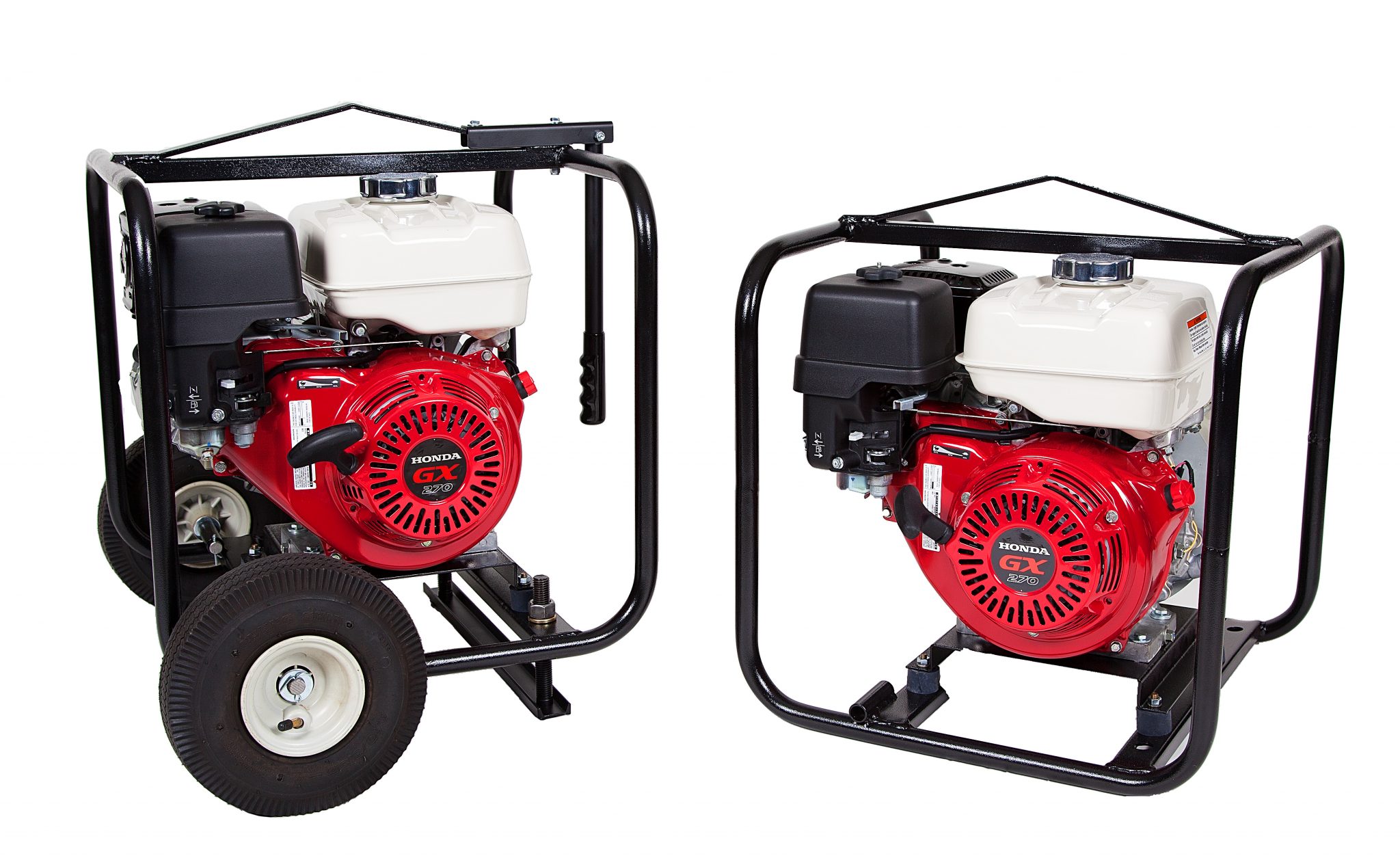
HIGH
CYCLE GENERATOR(s)
Full
4 KW - 3 Phase - 180 Hz
115V or 230V (Reconnectable) Briggs & Stratton 8 HP Engine IC
Series
- Cast Iron Bore
OR Honda 8 or 9 HP Engine IC Series
|
UNIVERSAL
|
The Universal
model RG60 was designed as an all-around concrete vibrator.
This motor-in-head unit runs between 10,000 to 14,000 RPM. The motor
will operate on either current (DC) or ordinary alternating current
(AC) The motor requires 115 volts and draws approximately 4 amperes.
Typically used with average slump concrete mixes in retaining walls,
bridge decks, and columns requiring long hose lengths..
|